
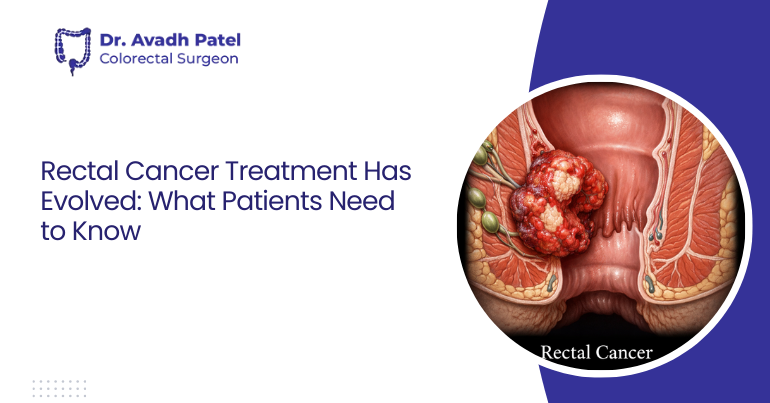
Hearing “you have rectal cancer” is very hard. It’s normal to be scared, numb, or even mad at life right now. You probably want honest answers, plain language and a little hope. Modern rectal cancer treatment makes it a lot easier to breathe than it used to be.
Doctors today don’t just want to get rid of your cancer. They also want to help you live a good life during and after treatment.
This blog will help you understand what has changed, what your options are and how you can feel a little more in control of this journey.
How Rectal Cancer Is Staged?
Doctors need to know exactly what’s going on inside the body before anyone talks about making big decisions. This is called staging and it shows you how to get the treatment you need.
The doctor may usually suggest:
- A full clinical exam.
- A colonoscopy to see the whole large intestine and get a biopsy.
- MRI of the pelvis to get a better look at the rectum and the tissues around it.
- CT scans of the chest and abdomen to see if it has moved to other parts of the body.
After all of this, the cancer is put into one of four stages: Stage I, II, III, or IV.
There is a best way to handle each stage, so proper staging helps you avoid making random choices and feeling scared for no reason. It makes things clearer, which can be calming on its own.
Modern Rectal Cancer Treatment Approach
Now, let’s talk about how rectal cancer treatment works in the present day. In the past, surgery was often the first step and it could be hard on the body. A lot of patients are happy that treatment is now more balanced and tailored to their needs.
The plan may include the following, depending on the stage and health:
- Chemotherapy, to kill cancer cells all over the body.
- Radiation therapy, to make the tumour smaller and lower the risk of it coming back in the same place.
- Surgery to take out the tumour, usually with laparoscopic or robotic methods to help the patient heal faster.
For many Stage II and III cases, doctors usually start, with chemoradiation, then plan surgery, and sometimes, add more chemotherapy later. This step-by-step method not only helps with long-term control, but it can also help you avoid a permanent stoma. That can have a big effect on how confident you feel every day and how you live your life.
Organ Preservation And Watch And Wait
This is a part that gives a lot of patients real hope. After chemoradiation and chemotherapy, scans and exams show that the tumour is almost completely gone in some people. In these carefully chosen cases, doctors may suggest a “watch and wait” plan instead of major surgery right away.
This method calls for regular check-ups, MRIs, scopes and physical exams, but not a big surgery right away. If everything stays clear, you won’t need to have surgery that will change your life and your bowels will work more naturally. If there are any signs that the cancer has come back, doctors usually recommend surgery right away to be safe. There has to be a careful balance between safety and quality of life.
Role Of Expert Planning And Timing
Planning and timing are still very important, even with all these new options. A focused team, which usually includes a colorectal surgeon, medical oncologist and radiation oncologist, gets together to decide what will happen first, next and later.
Following the plan really helps your chances. Taking long breaks, missing sessions, or stopping treatment in the middle can all make things work less well. So, ask questions, talk about how you feel and keep up with your team at a steady pace. You don’t have to deal with this by yourself or in silence.
Also Read – Rectal Prolapse: Causes, Symptoms & Treatment Options
Take The Next Step
It’s okay if your heart feels heavy right now. The good news is that modern rectal cancer treatment works much better, has fewer long-term side effects and gives people more dignity in their daily lives than it used to.
If you want honest, calm advice and a plan that works for you, think about making an appointment with Dr. Avadh Patel.