
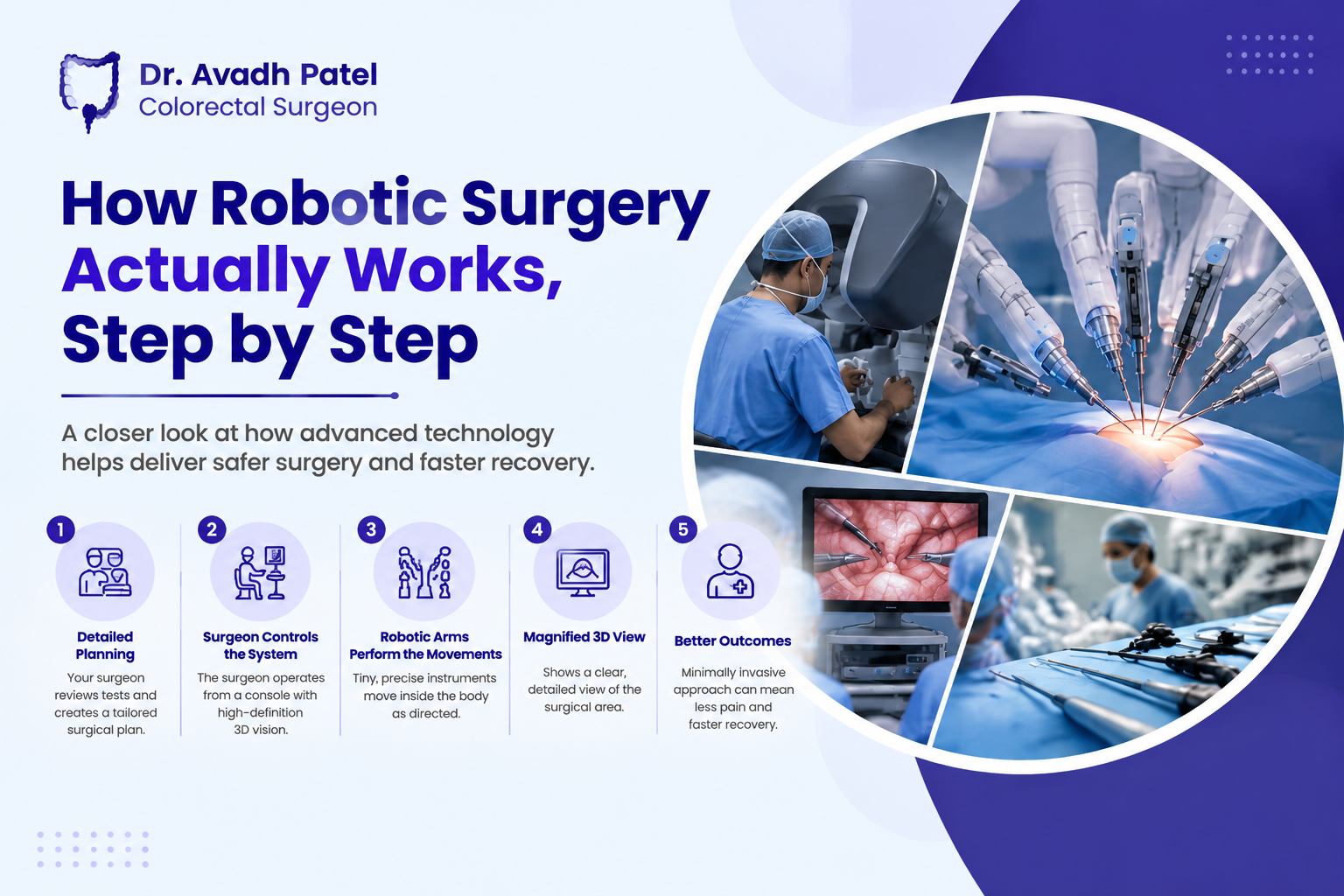
Facing surgery is never easy, and hearing the word “robotic” attached to it can make things feel even more uncertain. It is natural to picture a machine working on its own, with no human hand guiding it, and that thought alone can be scary. Take a breath, because that is not how it actually works.
A skilled robotic surgeon in Ahmedabad is in full control at every single moment, using advanced technology to operate with more precision than traditional methods allow.
Once the process is broken down step by step, most of that worry fades away, and what is left is simply a clearer picture of modern medical care.
Planning Comes Before Anything Else
Every robotic procedure begins with the process of initial preparation. In particular, a medical history of the patient will be analysed and some additional tests will be performed, including a CT or MRI scan. Based on the results of this preparation, the surgical team will make sure that the use of this technique will be justified.
The Process of Anaesthesia
As soon as the patient is placed on a surgery table, he/she will be provided with general anaesthesia. The ability to stay absolutely immobile plays an extremely important role in this process due to the high level of precision required. The patient’s vitals will be controlled constantly.
- Making Small Incisions
In contrast to the regular technique, when one big incision is made, several small holes will be created during the procedure, 1-2 cm in diameter. Then, a camera and specialised tools will be passed through these openings. As a result, the patient will experience a minimum level of tissue damage, reduced risk of infection and faster healing.
- Preparing the Robot
Now, the robotic arms are being installed above the patient’s body, while the surgeon is sitting at the console. The image of the surgical area will appear on the computer screen in the form of a three-dimensional image. All hand movements of the surgeon are converted into micro-movements of the robotic arms and hand tremors are eliminated this way.
- Starting the Procedure
When everything is ready, the surgeon starts performing his/her actions using rotating tools that can move much more easily and freely in comparison with a human wrist. Movements are scaled down to ensure the maximum level of precision. At the same time, the three-dimensional vision allows noticing nerves and blood vessels easily, thus avoiding their injury. An assistant works alongside the surgeon, providing help with tool manipulation.
- Monitoring the Patient Constantly
During the entire procedure, the patient is monitored constantly by the surgical team. Depending on the actual situation, the team can change its strategy. If something unexpected happens, an open surgery can be started.
- Finishing the Procedure
After the primary task, such as removal of the tumour or repair of the injured tissues, is performed, tools are removed, and small incisions are closed. Because the incisions are very small, scarring will be minimal.
- Easier Recovery Process
Robotic surgery is characterised by a minimum level of pain, blood loss and a shorter hospitalisation period. Most patients are able to return to their everyday activities within several days and have clear recommendations on wound care and follow-up visits.
If you are looking for the possibility of robotic surgery in Gujarat, choosing a highly skilled robotic surgeon in Ahmedabad will give you access to this technique and the real expertise of a local specialist, as well as follow-up visits.
The Importance of an Experienced Surgeon
No matter how innovative the technology is, it depends directly on the person who uses it. It is for this reason that the competence of a surgeon plays a key role. Thanks to Dr Avadh Patel, whose experience is invaluable, patients can be sure they will receive innovative and humane treatment from the first consultation through complete recovery.